
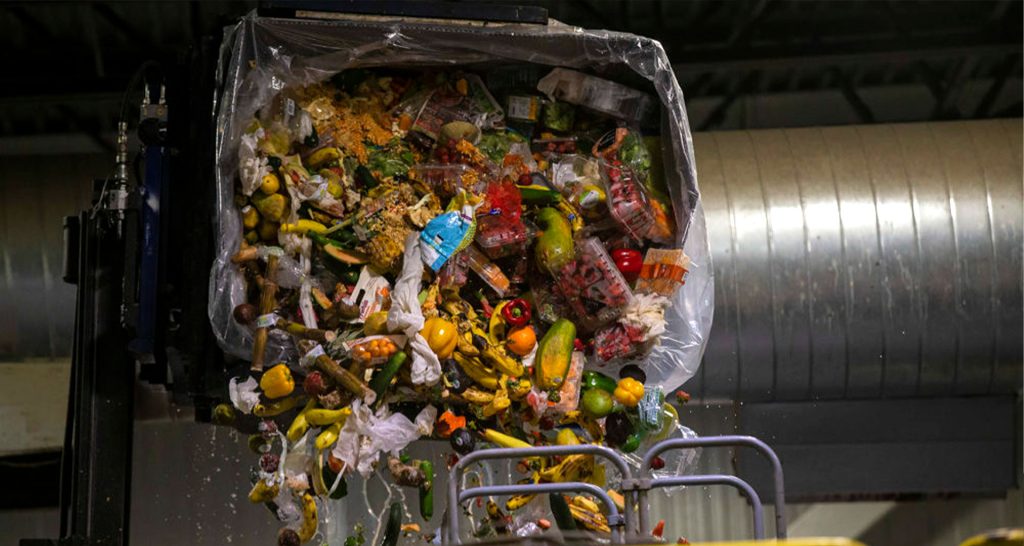
Part 1: From Field to Fork — Spoilage Is Silently Stealing Our Food Supply
Every year, the world produces enough food to feed every person on the planet. And every year, a massive portion of it never reaches a plate. Through spoilage in fields and storage facilities and losses across distribution chains, the agricultural system hemorrhages food at a scale that is both preventable and catastrophic. This is the first installment in a two-part series examining the global food waste crisis.
The Scale of What We’re Losing
Before we even discuss kitchens, restaurants, or grocery stores, the numbers upstream are staggering: ● 1.05 billion tonnes of food were wasted globally in 2022 (UNEP Food Waste Index Report 2024)
- 19% of all food available to consumers is wasted at the retail, food service, and household level (UNEP, 2024)
- An additional 13% is lost in the supply chain — before reaching retail (FAO)
- 13.2% of global food production was lost specifically during post-harvest stages of transport, storage, wholesale, and processing in 2021 (Scientific Reports / FAO SDG Indicators, 2025)
Together, these figures mean that roughly one third of all food produced globally never gets eaten. The human cost is inseparable from the economic one:
- $1 trillion — the estimated annual toll of food loss and waste on the global economy (UNEP / UNFCCC, 2024)
- 783 million people went hungry in the same year the world wasted over a billion tonnes of food (UNEP, 2022 data)
Where and Why Spoilage Happens
In Developing Regions: Infrastructure Gaps Are Lethal to Crops
- Biological spoilage is the primary driver of loss in less developed countries — livestock products, fish, fruit, and vegetables deteriorate rapidly without refrigeration (Action Contre la Faim / FAO)
- Inadequate transportation compounds the problem: absent refrigeration, intense heat, and rough roads lead to overripening, bruising, and microbial spoilage (Springer Nature / Discover Food, 2024)
- In some African, Caribbean, and Pacific countries, wastage can regularly reach 40–50% of produce (FAO / Action Contre la Faim)
- In Guatemala, storage losses have been estimated between 40 and 45% due to inadequate storage and high humidity (IICA)
- In Sub-Saharan Africa, FAO estimates suggest as much as 37% of food produced is lost between production and consumption (World Bank / FAO)
In Developed Regions: Cosmetic Standards and Cold Chain Failures ● Fruits and vegetables face disproportionate losses across all major industrialized regions, largely due to post-harvest grading driven by retailer cosmetic standards (FAO)
- More than 40% of food losses in industrialized countries occur at the retail and consumer levels (FAO Food Loss and Waste Report)
- In the United States, an estimated 29% of all food ends up unsold or uneaten each year (ReFED)
The Environmental Cost Behind Every Wasted Crop
- Food loss and waste generate 8–10% of annual global greenhouse gas emissions — nearly 5x the emissions from the entire aviation sector (UNFCCC / UNEP, 2024)
- ~1.4 billion hectares of land — roughly one-third of the world’s agricultural land — is used to grow food that is ultimately wasted (FAO / ScienceDirect)
- ~38% of total energy consumption in the global food system is used to produce food that is either lost or wasted (Geneva Environment Network)
- The blue water footprint of food waste exceeds 250 cubic kilometers annually (FAO / ScienceDirect)
How FreshSure Can Help
The spoilage crisis is not inevitable. ONZA Corp.’s FreshSure technology directly targets the biological mechanisms that cause food to deteriorate. FreshSure is a patented gas-to-solid technology that converts ozone into a stable, crystallized form — delivered in a simple food-safe sachet that continuously releases ozone gas inside food packaging. Ozone is FDA and USDA approved and certified organic.
- FROM FIELD TO DISTRIBUTION (Large sachet, >100g): Inhibits mold and spoilage organisms responsible for microbial deterioration in storage and transit — including humid, high-temperature environments where biological spoilage accelerates fastest.
- FROM DISTRIBUTION TO STORE (Medium sachet, 25–50g): Continuous ozone release suppresses spoilage organisms in real time, dramatically extending the freshness of produce like leafy greens and berries.
- FROM STORE TO TABLE (Small sachet, ~5g): Keeps packaged produce fresher longer — reducing the household-level spoilage that accounts for 60% of all food waste globally.
Consumer research with 700+ participants confirms strong demand: a strong majority of packaged salad buyers preferred FreshSure-containing products, and over 60% said they would switch brands to get it.
Part 2 of this series examines the contamination and recall crisis driving food loss and public health risk across the U.S. food system.
Sources: UNEP Food Waste Index Report 2024; FAO Food Loss and Waste Data; UNFCCC (September 2024); World Food Programme; ReFED; Geneva Environment Network; Action Contre la Faim; Springer Nature / Discover Food (2024); Scientific Reports / FAO SDG Indicators (2025); ScienceDirect; World Bank.
